Ice Dams 101
December 1, 2025
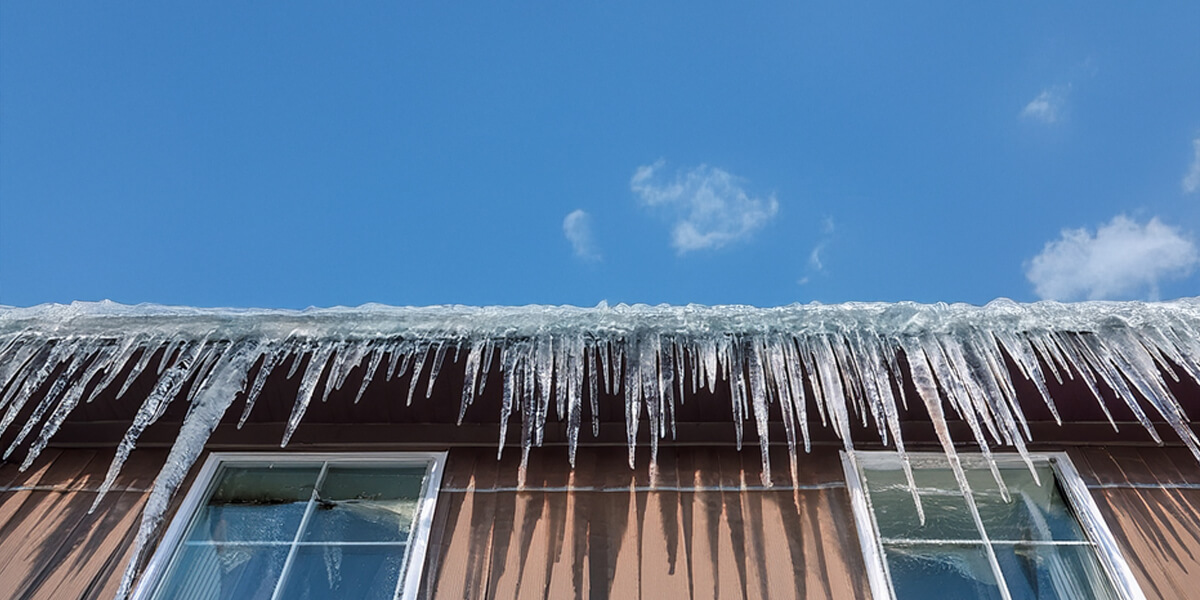
Winter is officially here for Ottawa–Gatineau (smh).
With winter comes the classic freeze–thaw cycles that turn daytime melt into nighttime ice. Without proper eave protection, balanced attic ventilation, and solid air-sealing, that meltwater can refreeze at the overhangs and form ice dams that push water back under shingles and into your home.
This guide walks through why ice dams happen here, what the Ontario Building Code requires at the eaves (the 900 mm up the slope / 300 mm inside the wall rule), and the practical steps you can take now to prevent leaks before the snow flies.
At Firon, we typically install ice shield the first 6 feet (and more in some cases) for extra protection.
Ice dams are winter’s sneakiest roof problem in Ottawa: snow melts high on a roof, refreezes at the cold eaves, and a ridge of ice blocks runoff. Water backs up under shingles and leaks into the attic, staining ceilings and soaking insulation. The good news? Most ice dams are preventable with a mix of code-compliant detailing and house-as-a-system fixes.
What Ice Dams are—and why Ottawa Homes get them
When the roof deck is warm near the peak (from indoor heat escaping) but cold at the overhangs, meltwater refreezes at the eaves and forms a dam. Ottawa’s freeze–thaw cycles, deep snow events, and sun on cold days make conditions ideal for this. Proper ventilation keeps the roof surface colder and reduces the risk.
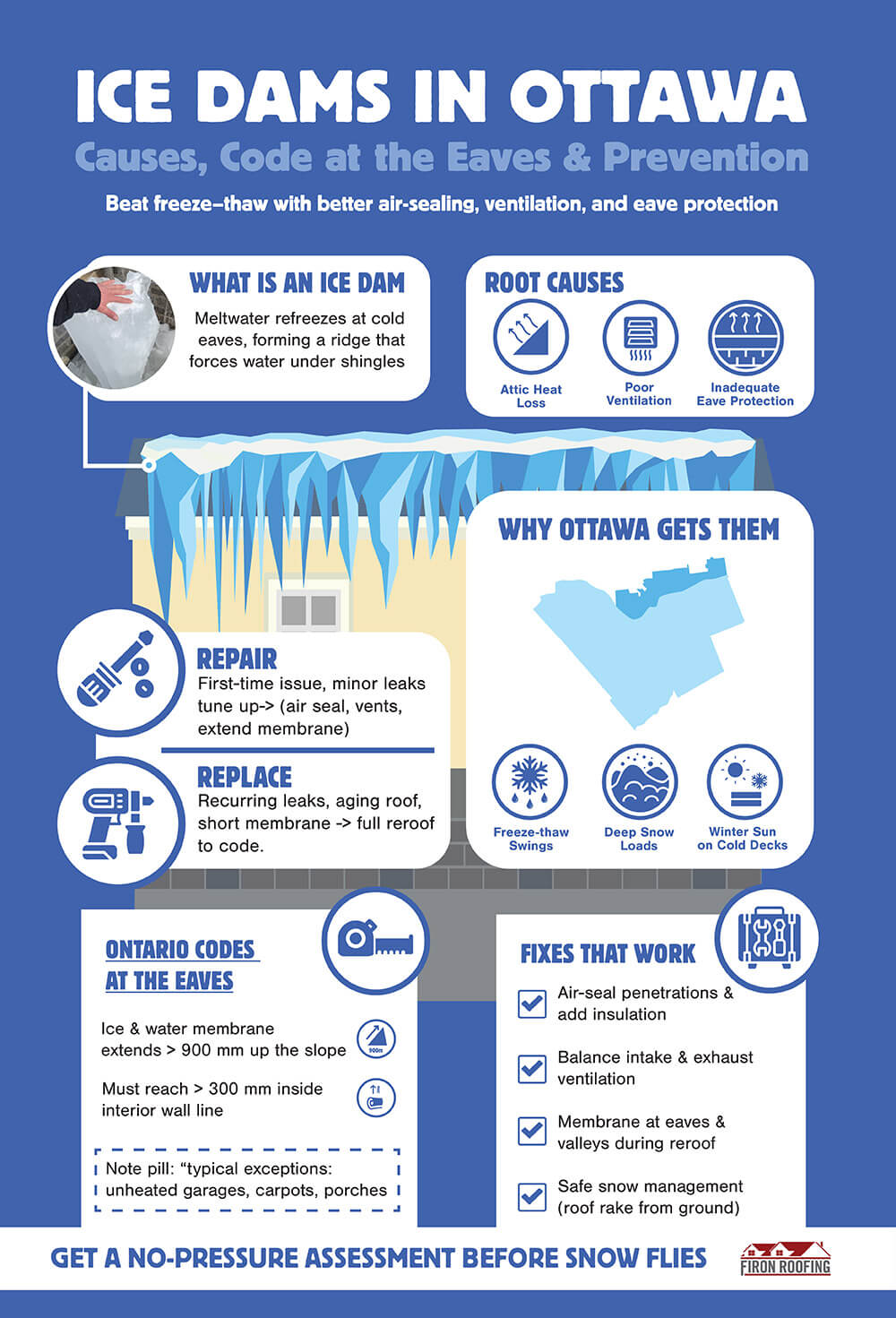
Root Causes
- Attic heat loss / air leaks: Warm air leaking into the attic heats the roof deck, starting the melt-refreeze cycle. Air sealing and insulation are the first lines of defense.
- Poor or unbalanced ventilation: Without adequate intake and exhaust, the attic runs warm and humid, promoting ice dams and condensation.
- Inadequate eave protection: Missing or short ice-and-water membrane at the eaves allows backed-up meltwater to reach the wood deck and joints.
Ontario Building Code: Eave-Protection Basics (the rule everyone should know)
For shingle, shake, or tile roofs in Ontario, eave protection (ice-dam membrane) must extend from the roof edge a minimum of 900 mm up the slope and reach at least 300 mm inside the inner face of the exterior wall. Exemptions include unheated garages, carports, and porches. Always pair with proper underlayment and ventilation.
Translation: on most heated homes, a peel-and-stick membrane belongs at all eaves (and commonly at valleys, eave returns, and low-slope transitions) to keep backup water out.
Fixes that work (and why)
- Air-seal & insulate the attic: Stop heat from reaching the roof deck. Seal penetrations (pot lights, bath fans, top plates) and bring insulation up to modern levels. This is the most durable cure.
- Balance intake and exhaust ventilation: Add soffit baffles where needed, clear blocked intakes, and ensure ridge or roof vents provide continuous exhaust. Ventilation reduces ice-dam risk and moisture issues.
- Install membrane at eaves—and valleys: During reroofing, run self-adhered ice-and-water membrane to the OBC distances at eaves and protect valleys/penetrations per manufacturer instructions.
- Practice safe snow/ice management: Keep gutters clear, use a roof rake from the ground after heavy snow, and avoid climbing onto a snowy roof; hire a pro for steaming/removal when necessary. At Firon, we offer snow and ice removal services to help you prevent future issues with ice dams from occuring.
Repair vs. replace — how to decide
Spot leaks, small ice ridges, or first-time issue? A repair + attic tune-up (air sealing, add baffles, increase intake/exhaust, extend membrane at eaves/valleys) may be enough.
Recurring leaks, deteriorated shingles, short eave membrane, or poor detailing at valleys/returns? It’s often more cost-effective to re-roof with a full code-compliant system: tear-off, deck fixes, ice-and-water to code, upgraded underlayments, proper flashings, and balanced ventilation.
For homeowner context on Ontario ice-damming and winter roof behavior, see local trade guidance and home-builder resources.
Call the pros (we’ll sort the root cause, not just the symptoms)
Book a roof assessment: we’ll check insulation, air leaks, intake/exhaust balance, and whether your eave protection meets OBC 9.26.5.1. If a repair makes sense, we’ll quote it; if a replacement is smarter, we’ll price options and explain the value clearly.
Sources
- Ontario Building Code: eave-protection requirement (900 mm up-slope; 300 mm inside wall; exemptions).
- Canadian Roofing Contractors Association: CRCA ventilation bulletin: how balanced ventilation helps prevent ice dams and condensation.
- Ontario Home Builders: homeowner-friendly ice-dam explainers.
This guide reflects public information as of December 2025. Always verify your specific situation with a qualified roofing professional and local officials.
Trust the Roofing Leaders
We bring decades of experience, unmatched craftsmanship, and premium materials to every project.